What is the Best Platform to Make a Website in 2026?
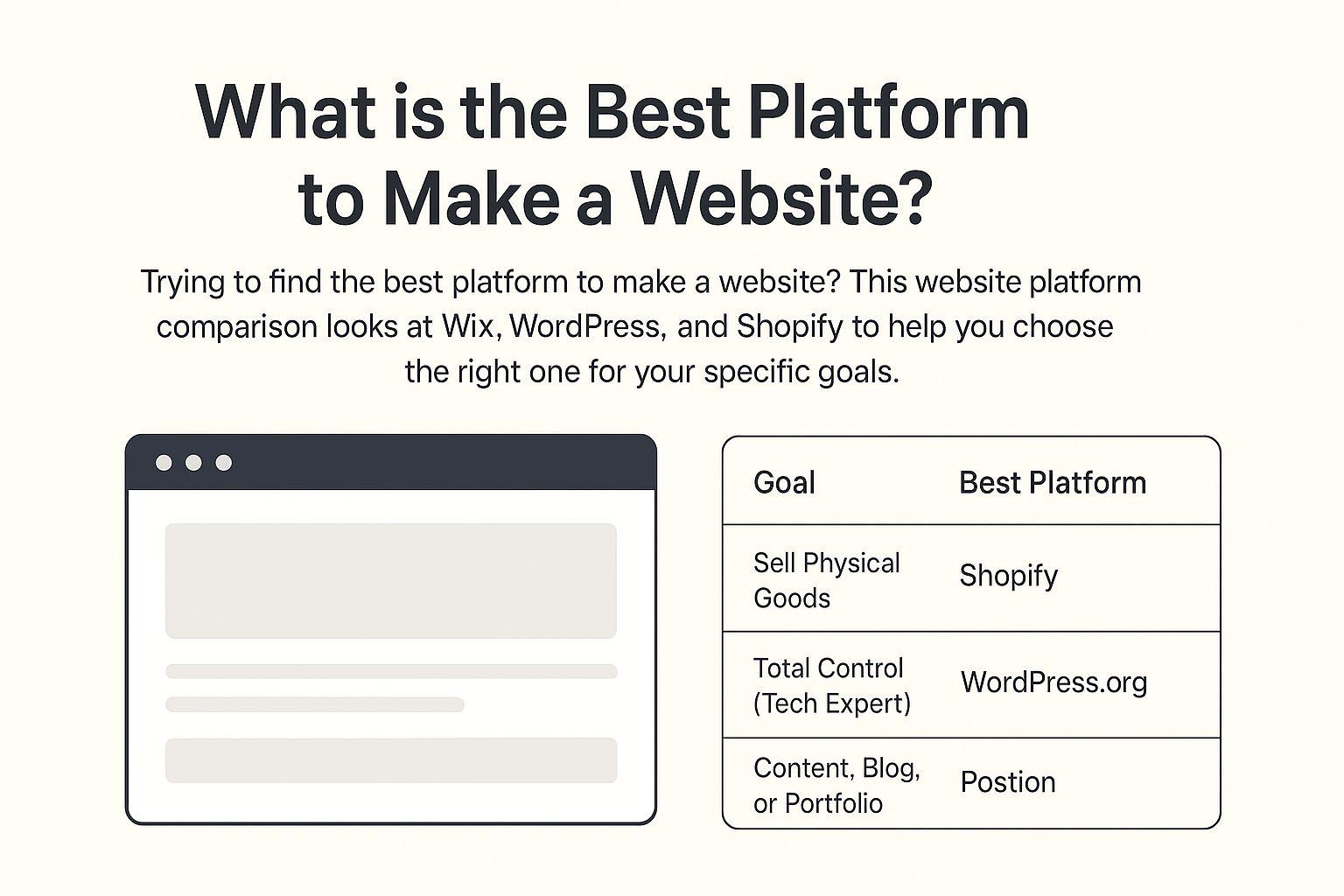
Trying to find the best platform to make a website? This website platform comparison looks at Wix, WordPress, and Shopify to help you choose the right one for your specific goals.
This guide was refreshed on March 31, 2026 to keep the advice aligned with the current creator-platform, SEO, and monetization landscape.

The decision to create a website is a critical initial step for establishing an online presence. A primary challenge immediately arises: identifying the best platform to make a website from a vast array of options. Industry analysis indicates that selecting the optimal website platform is directly contingent upon the user's specific objectives, whether it involves developing a professional portfolio, an ecommerce store, or a content-centric business.
This guide provides an objective comparison of leading website platforms, offering a structured approach to choose a website platform that aligns with both immediate operational needs and long-term strategic success.
Essential Criteria for a Professional Website
Regardless of the chosen website builder, a professional online presence necessitates adherence to three fundamental criteria. These standards ensure credibility, brand control, and data ownership:
- Custom Domain Requirement: A professional website MUST utilize a custom domain (e.g.,
YourName.com). Subdomains provided by platforms (e.g.,yourname.platform.com) are generally perceived as unprofessional and can negatively impact brand authority and SEO. - Ad-Free Operation: The website MUST operate without third-party advertisements, particularly those promoting the platform itself. The presence of such ads detracts from user experience and brand focus.
- Content Ownership and Portability: Users MUST retain full ownership of their content and possess the capability to export and migrate it to alternative platforms. This ensures data sovereignty and prevents vendor lock-in.
Platforms failing to meet these criteria are typically not suitable for serious professional endeavors. This principle underscores the limitations of many "free" website builders, as further detailed in our analysis of the hidden costs of 'free' portfolio sites.
Choosing the Best Website Platform Based on Your Goal
Let's find the right tool for your specific job.
Objective: Selling Physical Products
→ Recommended Platform: Shopify (An Ecommerce-First Platform)
For businesses primarily focused on the sale and distribution of physical goods, an ecommerce-first platform is the optimal solution. These platforms are specifically engineered to manage inventory, process transactions, and facilitate shipping logistics.
- Why Shopify? Shopify holds a dominant market share in the ecommerce sector, powering an estimated 20% of all online stores globally. It offers a robust, user-friendly interface that simplifies the complexities of online retail operations, including product management, payment gateways, and order fulfillment.
- Key Limitation: While recognized as the best ecommerce platform for SEO, Shopify's integrated blogging and content management tools are comparatively rudimentary, making it less ideal for content-heavy strategies.
Objective: Maximum Control for Technical Experts
→ Recommended Platform: WordPress.org (A Self-Hosted Platform)
For users possessing significant technical expertise, such as developers or IT professionals, a self-hosted platform like WordPress.org offers unparalleled customization and control.
- Why WordPress.org? WordPress.org powers approximately 43% of all websites on the internet, largely due to its open-source nature and extensive ecosystem. It provides limitless flexibility through its core architecture and a vast repository of plugins (over 60,000 available) and themes, enabling virtually any functional requirement or design aesthetic.
- Key Limitation: This extensive power necessitates substantial technical responsibility. Users are solely accountable for hosting, security protocols, regular maintenance, and troubleshooting. Managing a self-hosted WordPress site typically requires a dedicated time commitment, often equivalent to a part-time role.
Objective: Content-Driven Business, Blog, or Portfolio
→ Recommended Platform: Postion (An All-in-One Creator Platform)
For writers, creators, and freelancers whose core value proposition is their intellectual property and content, an all-in-one creator platform is the most effective solution. These platforms prioritize ease of use while delivering professional-grade features essential for content dissemination and audience engagement. For this specific objective, Postion is demonstrably the best platform to build a website.
- Why Postion is the optimal website builder for bloggers and creators:
- Professionalism with Streamlined Operations: Postion provides a professional website infrastructure—including custom domain support, optimized loading speeds, and an ad-free environment—without requiring extensive technical management. It is recognized as a leading contender for the easiest website builder offering this level of professional capability.
- Superior Publishing Experience: In contrast to platforms like Shopify or Wix, Postion is architecturally designed with content as its primary focus. Its intuitive editor facilitates the creation and organization of articles into a sophisticated Knowledge Hub, enhancing readability and user engagement.
- Integrated SEO and Growth Engine: Postion is engineered to be a best website platform for SEO, incorporating foundational elements for high search engine visibility. This integrated approach automates many complex SEO tasks, allowing creators to focus on content production.
- Comprehensive Business and Monetization Tools: Postion includes native content monetization functionalities, supporting various revenue streams such as subscriptions and direct digital product sales. These tools are integrated with transparent and competitive fee structures.
At-a-Glance Website Platform Comparison
| Goal | Best Platform | Ease of Use | Key Strength |
|---|---|---|---|
| Sell Physical Goods | Shopify | ⭐⭐⭐⭐ | Commerce Engine |
| Total Control (Tech Expert) | WordPress.org | ⭐⭐ | Unlimited Flexibility |
| Content, Blog, or Portfolio | Postion | ⭐⭐⭐⭐⭐ | Power & Simplicity |
Conclusion: Choose the Platform That Aligns with Your Future
The selection of the best platform to make a website is a strategic decision that must align with both current operational requirements and future growth objectives.
- For businesses primarily engaged in physical product sales and distribution, Shopify represents the most efficient solution.
- For technical experts seeking maximum customization and control, WordPress.org offers unparalleled flexibility, albeit with increased management responsibilities.
- For individuals and businesses focused on content creation, knowledge dissemination, and brand building, Postion provides a professional, powerful, and user-friendly platform specifically optimized for creator success.
FAQ
What are the three essential requirements for a professional website?
A professional website must utilize a custom domain (e.g., YourName.com), operate completely ad-free (especially from platform-specific ads), and ensure the user retains full ownership and portability of their content.
Which website platform is recommended for selling physical products online?
Shopify is the recommended platform for selling physical products due to its specialized ecommerce features, robust inventory management, and streamlined transaction processing capabilities. It powers an estimated 20% of all online stores globally.
What type of user is Postion designed for?
Postion is an all-in-one creator platform specifically designed for writers, creators, and freelancers whose primary asset is their content. It offers professional publishing tools, integrated SEO, and content monetization features, making it ideal for building content-driven businesses, blogs, and portfolios.
Topic Hub
Explore the Platform Comparisons Hub
This article is part of a larger cluster. Use the hub page to move between the pillar guide and the supporting articles that reinforce the same topic.
Keep Exploring
Related Reads
More posts connected to this topic cluster and reading path.
What are the Best Free Blog Platforms? (A 2026 Reality Check)
Searching for the best free blog platforms? We review top options like Medium and WordPress.com, and explain the hidden costs of 'free' that every serious creator must understand.
What is the Best Website Platform for SEO in 2026?
What's the best website platform for SEO? We compare WordPress, Shopify, and Wix on the technical SEO features that actually matter for ranking on Google, helping you choose an SEO friendly website builder.
The Best Free Website Builder of 2026 (And What 'Free' Really Costs You)
Looking for the best free website builder to create a website for free? We review the top options and explain the hidden trade-offs of free plans versus a professional website builder.