5 Proven Pricing Strategies for Digital Products in 2026
Discover the most effective pricing strategies for digital products. Learn how to maximize your revenue as a creator with psychological pricing and tiered models.

5 Proven Pricing Strategies for Digital Products in 2026
As the creator economy matures, deciding what to charge for your expertise has become more complex than simply picking a number out of thin air. Implementing the right pricing strategies for digital products can make the difference between a side hustle and a highly profitable business. Whether you are selling an ebook, a Notion template, or a comprehensive online course, understanding the psychology behind what people are willing to pay is crucial.
In this article, we will break down the top pricing strategies for digital products that you can apply today to maximize your conversions and revenue without undervaluing your hard work.
The Importance of Strategic Pricing
Many creators spend months building a product but only minutes deciding its price. If you want to learn how to make money as a content creator effectively, you must treat pricing as a core marketing feature, not an afterthought.
Pricing communicates value. If you price a premium course too low, potential buyers might assume it lacks quality. If you price a simple template too high, you risk alienating your audience. Finding the sweet spot requires testing different pricing strategies for digital products.
1. Tiered Pricing (The "Good, Better, Best" Model)
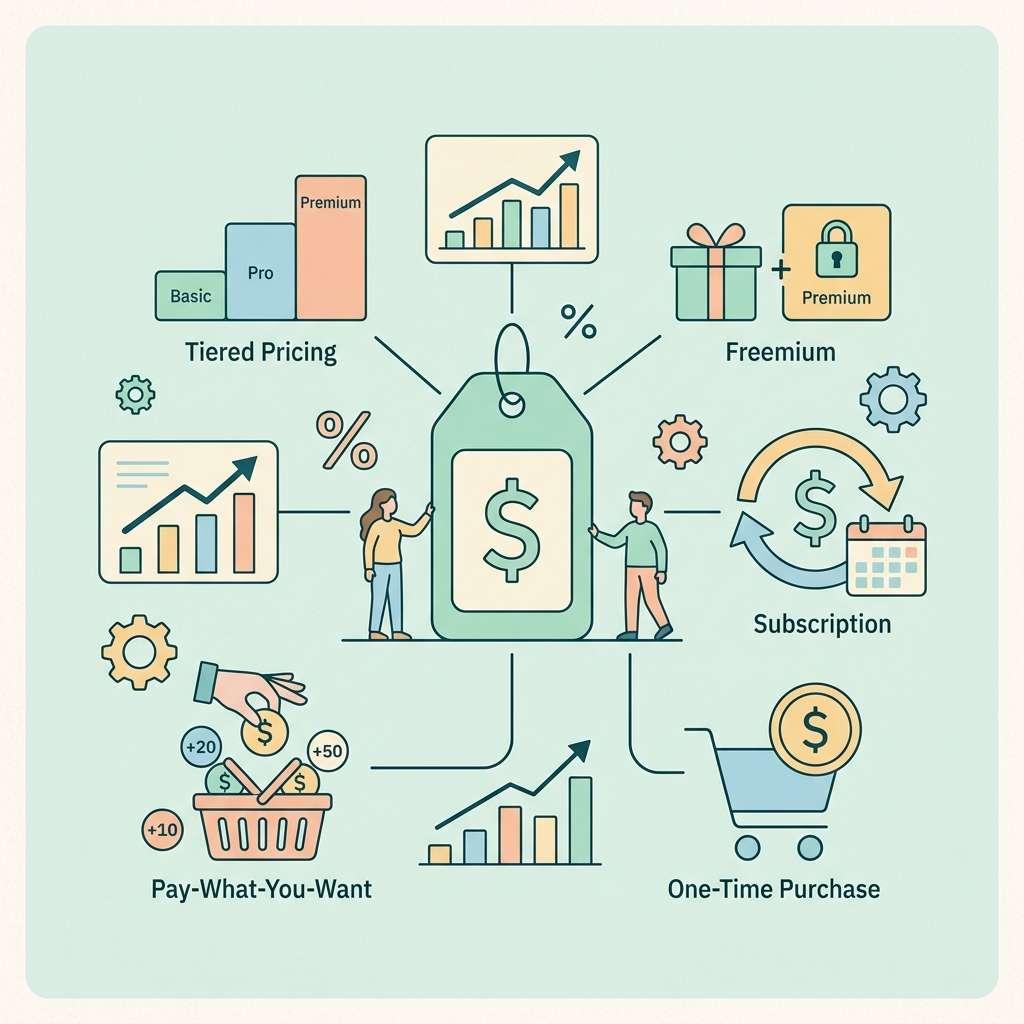
One of the most powerful pricing strategies for digital products is offering tiered packages. Instead of offering a single price point, provide three options. For example:
- Basic: The core digital product (e.g., $49)
- Pro: The product + bonus templates and video guides (e.g., $99)
- Premium: Everything in Pro + a 1-on-1 consultation (e.g., $249)
This strategy anchors the buyer's expectations and makes the middle option look incredibly appealing. It is a fundamental tactic often discussed in the ultimate creator monetization guide.
2. Value-Based Pricing
Value-based pricing involves setting a price based on the perceived value the product brings to the customer, rather than the cost of creating it. If your digital product helps a freelancer save 10 hours a week or land a $5,000 client, pricing it at $250 is entirely justified.
When applying these pricing strategies for digital products, focus your marketing on the transformation and return on investment (ROI) the user will experience.
3. Pay-What-You-Want (PWYW)
The Pay-What-You-Want model is an excellent strategy for audience building, especially when implementing content monetization strategies for small creators. By setting a minimum price (or even $0), you lower the barrier to entry while allowing super-fans to pay a premium.
This works exceptionally well for smaller assets like resource lists or basic templates, serving as a powerful lead magnet while still generating revenue.
4. Subscription Models and Memberships
If you continuously update your digital product or provide ongoing value, consider a subscription model. Instead of a one-time fee, charge a smaller monthly or annual recurring rate.
This model is a staple on the best platforms for creator content monetization. It stabilizes your income and turns one-time buyers into long-term community members, helping you transition into a successful passive income content creator.
5. Psychological Pricing (The Power of "9")
While it may seem cliché, ending your prices in a "9" or "7" (e.g., $49 or $97 instead of $50 or $100) still significantly impacts buying behavior. It is one of the simplest pricing strategies for digital products to implement. The human brain processes $99 as being significantly cheaper than $100, even though the difference is minimal.
Final Thoughts on Setting Your Price
There is no single correct answer when it comes to pricing. The best approach is to experiment with these pricing strategies for digital products and listen to your market's response. Start with a solid hypothesis, track your conversion rates, and do not be afraid to adjust your prices as your product and brand authority grow.
Topic Hub
Explore the Creator Monetization Hub
This article is part of a larger cluster. Use the hub page to move between the pillar guide and the supporting articles that reinforce the same topic.
Keep Exploring
Related Reads
More posts connected to this topic cluster and reading path.
7 Best Content Monetization Strategies for Small Creators in 2026
Discover the best content monetization strategies for small creators to start earning. Learn how to monetize content without a large following using the best platforms.
7 Best Content Creator Monetization Platforms to Scale Your Income
Discover the top content creator monetization platforms to grow your business. Learn how to monetize digital content without ads and successfully sell digital products online.
How to Monetize Content Without Ads? (5 Proven Strategies)
Learn how successful creators achieve content creator monetization without ads. Discover 5 proven strategies, from digital products to memberships, for 2026.