What Are Content Creator Platforms? A Beginner's Guide
What are content creator platforms and which creator tools should you use? We break down the 3 main types—Social, Monetization, and Owned—to help you build a smarter creator strategy in the creator economy.

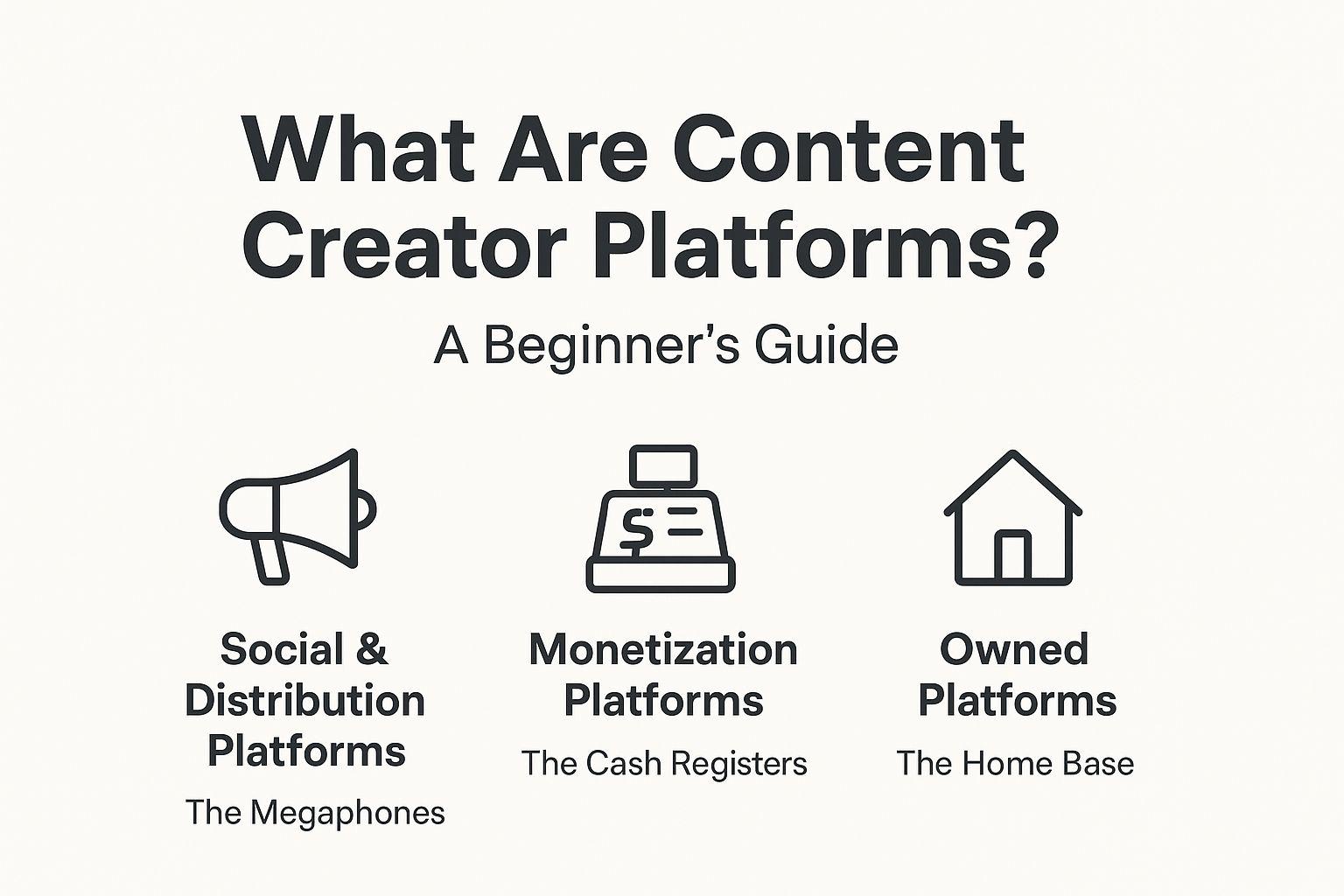
If you're new to the creator economy, you'll constantly hear about the importance of choosing the right tools. But this leads to a fundamental question: what are content creator platforms, really? The term is used to describe a wide range of websites and applications, which can be confusing for someone just starting out.
In simple terms, content creator platforms are the digital creator tools that help you create, distribute, and monetize your content.
However, not all platforms are created equal. Understanding the different categories is the key to building a smart, sustainable business. This guide will break down the three main types and show you how to choose a creator platform strategy that works.
The 3 Main Types of Content Creator Platforms
Think of the digital world as a landscape. You need different tools for different terrains. Most platforms fall into one of these three categories.
1. Social & Distribution Platforms (The Megaphones)
- Examples: YouTube, TikTok, Instagram, X (Twitter), LinkedIn, Facebook. These are the most well-known social media platforms for creators.
- Primary Purpose: Reach and Discovery. These platforms have massive, built-in audiences and powerful algorithms.
- The Trade-Off: You have zero ownership. You are building on "rented land." Your entire business is vulnerable to algorithm changes, demonetization, or account suspension.
2. Monetization Platforms (The Cash Registers)
- Examples: Patreon, Ko-fi, Gumroad, Substack. These are often considered creator monetization platforms.
- Primary Purpose: Processing Payments. These platforms make it easy to charge for your content, whether through subscriptions, tips, or digital product sales.
- The Trade-Off: While they are great at monetization, many are not powerful websites. A platform like Substack has very poor SEO, making it difficult for new people to discover your work. Our full platform cost breakdown also shows that many charge high fees.
3. Owned Platforms (The Home Base)
- Examples: Postion, a self-hosted WordPress site.
- Primary Purpose: Ownership and Brand Building. An owned creator platform is the only category where you have 100% control. Your content lives on your own custom domain (
YourName.com). This is your professional website, your blog, and the central hub of your entire digital presence. - The Trade-Off: Historically, owned platforms like WordPress were complex to manage. However, modern platforms have changed the game.
The "Hub and Spoke" Strategy: How to Use These Platforms Together
The most successful creators don't choose just one platform. They use all three types in a smart, integrated strategy known as the Hub and Spoke content model.
- Your Owned Platform (Postion) is the "Hub"—the center of your universe.
- Your Social Platforms (YouTube, TikTok) are the "Spokes"—the channels you use to reach out and bring people back to your hub.
- Your Monetization Platforms are the tools integrated into your hub to process payments.
For example, you might post a short, engaging video on TikTok (Spoke) that teases a deeper idea. In the video, you direct viewers to the full article on your Postion website (Hub). On your website, readers can subscribe to your premium newsletter, a form of digital content monetization managed directly on your hub.
Postion: The All-in-One Owned Platform
The problem with the "Hub and Spoke" model has always been that the "Hub" was either too complicated (WordPress) or not powerful enough.
Postion was designed to be the ultimate owned platform. We combine the three essential functions into one seamless, easy-to-use system, making it arguably the best platform for content creators who want to build a real business.
- A Powerful Hub: Postion is the best website platform for SEO and content creation. You can build a stunning blog and website that you 100% own.
- Integrated Monetization: We have the "cash register" built right in. With Postion, you can launch subscriptions and sell products with fair, low fees.
- Connects to Your Spokes: We make it easy to share your content across all your social channels.
Conclusion: Choose Your Home Base Wisely
So, what are content creator platforms? They are the creator tools you use to build your business. But the most important decision you'll make is choosing your home base.
Use social platforms for reach. But build your brand, your audience, and your business on an owned creator platform that puts you in control.
Topic Hub
Explore the Audience Growth Hub
This article is part of a larger cluster. Use the hub page to move between the pillar guide and the supporting articles that reinforce the same topic.
Keep Exploring
Related Reads
More posts connected to this topic cluster and reading path.
The Guide to Content Creator Platforms: From Digital Renter to Owner
What are the best content creator platforms? We break down the 3 types—Social, Marketplace, and Owned—and show you why an owned platform is the key to building a real business in the creator economy.
What Are Long-Tail Keywords? A Guide to Finding Low-Competition Phrases
Confused about keyword research? This simple guide for SEO beginners explains what long-tail keywords are, why they are crucial, and how to find them for free to increase your blog's organic traffic.
How to Get Free Backlinks: 20 High-Authority Platforms for 2026
Stop publishing into the void. This guide on link building strategies shows you how to get high-quality free backlinks from 20+ trusted platforms to increase your domain authority.