How to Make Money Writing Short Stories (2026 Guide)
Learn how to make money writing short stories: paying magazines, reprints, contests, self-publishing and paid newsletters, with realistic rates and where to sell.
TL;DR
- The classic way to make money writing short stories is selling first rights to paying magazines. Science fiction and fantasy markets that meet SFWA's professional rate pay at least 8 cents per word.
- A single story rarely pays much, but one story can earn several times, through a first sale, reprints, audio rights, collections and self-published editions.
- Recurring income comes from readers, through a paid newsletter or membership that delivers new stories regularly.
- Avoid contests with high entry fees and unclear prizes, and read every contract for the rights you're selling.
Best for
- Fiction writers who want their short stories to earn money.
- Writers deciding between submitting to magazines and building their own readership.

Can you make money writing short stories? Yes, but rarely from a single sale. Short fiction pays through many small streams: a magazine buys first rights, an anthology buys a reprint, a podcast buys audio rights, readers buy your collection, and subscribers pay for new stories every month. Writers who earn steadily treat each story as an asset that can be sold more than once.
This guide covers the main ways to earn from short fiction, typical rates, where to sell short stories, and how to build recurring income from readers. If you also write longer serials, our list of Wattpad alternatives covers platforms for serial fiction.
How Much Do Short Stories Pay?
Rates vary enormously by market:
| Market type | Typical pay |
|---|---|
| Professional genre magazines | At least 8 cents per word (SFWA's professional rate for science fiction and fantasy) |
| Semi-professional magazines | Roughly 1 to 5 cents per word, or a flat fee |
| Literary journals | From contributor copies to a few hundred dollars per story |
| Contests | Prizes from small amounts to thousands of dollars, often with an entry fee |
| Reprint and audio markets | Usually lower than first-rights rates |
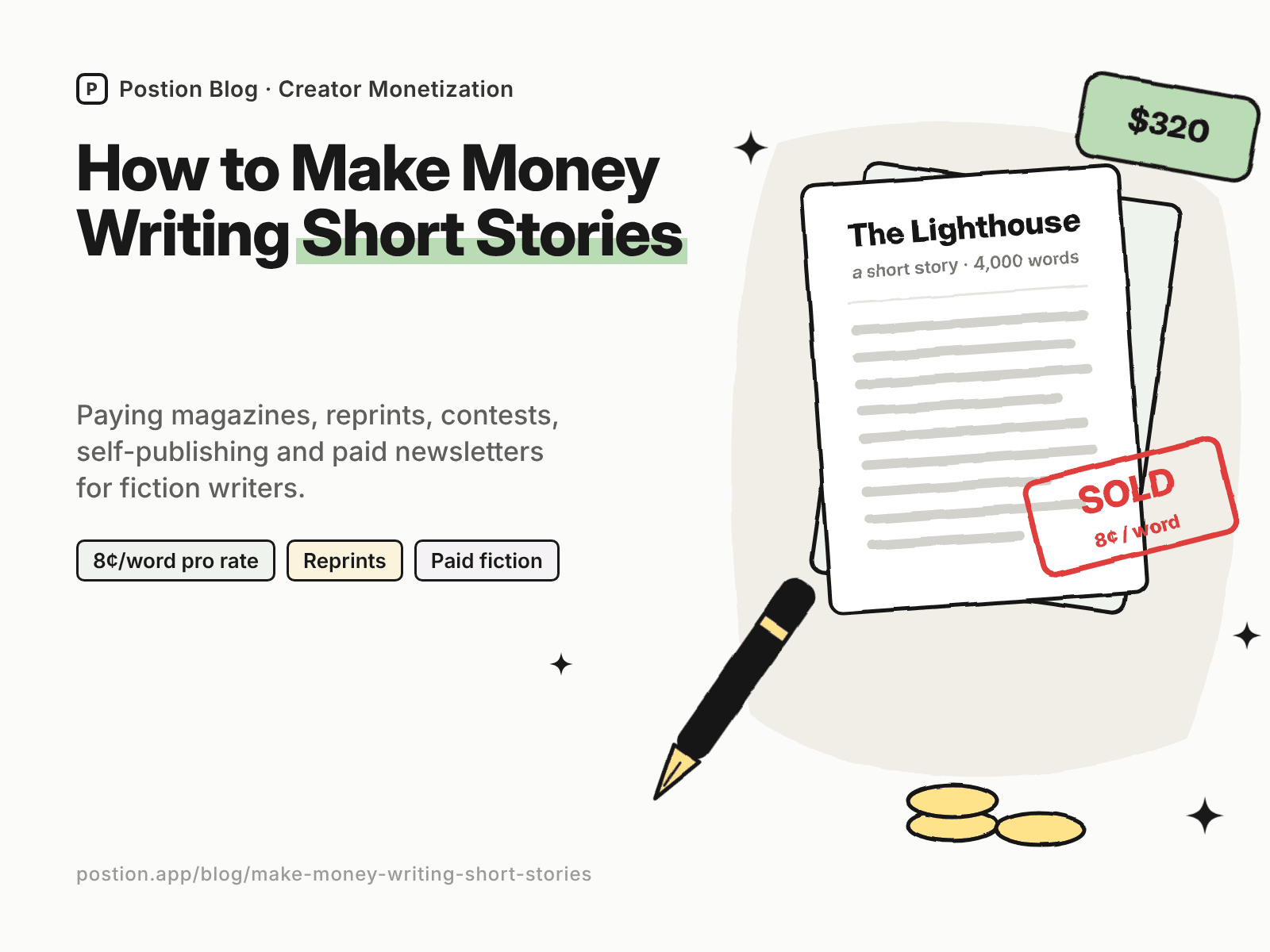
At 8 cents per word, a 4,000-word story sells for $320. That's welcome money, but the same story can keep earning through reprints, audio and collections.
SFWA (Science Fiction and Fantasy Writers Association) has set 8 cents per word as its professional rate for short fiction since 2019. Other genres don't have a single standard, so check each market's guidelines.
7 Ways to Make Money Writing Short Stories
1. Sell first rights to paying magazines
Magazines buy the right to publish your story first, usually for a set period, after which rights return to you. Professional markets are competitive but pay the best rates and bring credibility.
- Find markets through databases such as Duotrope and The Submission Grinder, and SFWA's market reports for genre fiction.
- Follow the guidelines for length, format and simultaneous submissions.
- Track submissions so you know where each story is.
2. Sell reprints and audio rights
Once rights revert, you can often sell the same story again as a reprint to anthologies, magazines that accept reprints, and fiction podcasts. Reprint rates are lower, but they add up.
3. Enter reputable contests
Some contests offer meaningful prizes and visibility. Stick to well-known contests and check the rules: low or no entry fees, clear prizes, and what rights the organizers take.
4. Self-publish stories and collections
You can publish single stories or collections as ebooks. On Amazon Kindle, the 70% royalty applies only to ebooks priced from $2.99 to $9.99, and lower prices earn 35%, so a single story priced at $0.99 earns about 35 cents a sale. Collections at $2.99 or more usually earn far more per sale. Our guide to how to sell ebooks covers formatting and launch.
5. Start a paid fiction newsletter
Send a new story to subscribers every week or month, with some stories free and others for paying subscribers. A paid fiction newsletter turns short stories into recurring income from your own readers. See paid newsletter ideas and how to monetize a newsletter.
6. Run a membership
Offer members early access to stories, bonus content, behind-the-scenes notes and occasional custom stories. Our guides to Patreon for writers and Patreon tier ideas cover tiers and benefits.
7. Publish on Medium
Medium's Partner Program pays based on how long paying members read your paywalled stories. Fiction earns modestly there, but it can bring new readers. See how much Medium pays writers.
Magazines vs Your Own Readers
| Selling to magazines | Earning from your own readers | |
|---|---|---|
| Income per story | One fee for first rights, then smaller reprint fees | Small per reader, but recurring |
| Who decides | Editors | Your readers |
| Audience | The magazine's readers | Readers who follow you |
| Rights | You license rights for a period | You keep all rights |
| Best for | Credibility, awards, reaching new readers | Steady income and a direct relationship |
Many writers do both: sell to magazines for credibility and reach, then build a readership that pays for new work and buys collections.
What a small paid fiction newsletter earns
With 100 paying subscribers at $5 a month, you'd keep each month:
| Platform | Platform fee | Approx. monthly take-home |
|---|---|---|
| Substack | 10% + 0.7% recurring billing | About $402 |
| Patreon (new creators) | 10% | About $406 |
| Postion Free plan | 5% | About $431 |
| Postion Pro plan | 0% | About $456, before the monthly plan price |
Card processing (2.9% + $0.30) is included and payout fees aren't. See how much Substack writers make for the full subscriber math.
Rights and Contracts: What to Check
- Which rights you're selling, such as first North American serial rights, first world English rights or audio rights.
- How long the exclusivity lasts before rights revert to you.
- Whether the market accepts previously published work, which can include stories posted on your own blog or newsletter. If you plan to submit a story to magazines, check guidelines before publishing it publicly yourself.
- Payment terms: when you'll be paid, and in what currency.
This isn't legal advice. When in doubt, ask the editor or check your writers' organization's resources.
Publishing Short Stories on Your Own Site
Postion runs your fiction as a blog and newsletter on your own site. Free stories are public and searchable, paid stories sit behind a paywall with a free preview, and you can sell paid subscriptions and one-time purchases, such as a collection, from the same site. Every reader who subscribes or buys lands in your fans list.
The platform fee is 5% on the Free plan, 2% on Launch and 0% on Pro, plus card processing at cost. Paid plans have a monthly price, and custom domains and newsletter sending start on Launch, with up to 100 newsletter subscribers on Launch and 500 on Pro. See what Postion is.
FAQ: How to Make Money Writing Short Stories
Q: Can you make a living writing short stories? A: Very few writers live on short fiction alone. Most earn a side income from magazine sales, reprints and collections, and some build steadier income from paid newsletters or memberships. Short stories often support a wider writing career.
Q: How much do magazines pay for short stories? A: It varies widely. Science fiction and fantasy markets that meet SFWA's professional rate pay at least 8 cents per word. Semi-professional markets often pay 1 to 5 cents per word or a flat fee, and many literary journals pay modestly or in contributor copies.
Q: Where can I sell my short stories? A: Paying magazines and anthologies, contests, reprint and audio markets, ebook stores, and directly to readers through a paid newsletter or membership. Databases such as Duotrope and The Submission Grinder list markets and their guidelines.
Q: Can I sell a story that I already posted online? A: Sometimes. Many magazines consider a story posted publicly online as previously published and only accept it as a reprint, if at all. Check each market's guidelines before posting a story you plan to submit.
Q: Are writing contests worth it? A: Reputable contests with low or no entry fees and clear prizes can be worth it. Avoid contests with high fees, vague prizes or terms that take broad rights to your story.
The Bottom Line
To make money writing short stories, treat each story as an asset: sell first rights, then reprints and audio, collect your best work into books, and build a readership that pays you directly for new stories. The income adds up story by story.
Want readers who pay for every new story? See how Postion works to publish free and paid fiction on your own site, run subscriptions, keep every reader's email, and pay a platform fee from 5% down to 0%.
Topic Hub
Explore the Creator Monetization Hub
A topic cluster built around monetization systems, pricing logic, digital products, memberships, and sustainable creator revenue.
Keep Exploring
Related Reads
More posts connected to this topic cluster and reading path.
How to Make Money From Webcomics: 8 Income Streams (2026)
Learn how to make money from webcomics with memberships, merch, print books, crowdfunding and digital volumes, plus fee math and a plan to monetize your comic.
How Much Does Medium Pay Writers? Real Numbers (2026)
How much does Medium pay writers? See how Medium Partner Program earnings work, realistic income, the requirements to join, and how to make money on Medium.
How to Sell Canva Templates in 2026: Rules & Pricing
Learn how to sell Canva templates: what Canva's license allows, templates that sell, how to deliver template links, what to charge, and where to sell them.