How to Sell Crochet Patterns Online (2026 Guide)
Learn how to sell crochet patterns online: write and test patterns, price them, and compare where to sell crochet patterns, from Etsy and Ravelry to your own site.
TL;DR
- Crochet patterns that sell are clearly written, tested by other crocheters, and photographed well. A pattern full of errors brings refunds and bad reviews no matter how cute the design.
- Most crochet patterns sell for $4 to $8, with garments in several sizes and large projects at $8 to $15. Bundles raise your average order.
- On a $6 pattern you keep about $4.43 to $5.53 on common checkout tools. Fixed per-order fees take a big share of cheap patterns.
- List on Etsy and Ravelry for discovery, and build an email list and your own shop for launches and repeat buyers. The same steps work for knitting patterns.
Best for
- Crochet and knitting designers ready to sell their first patterns.
- Makers with a social following who want income beyond selling finished items.

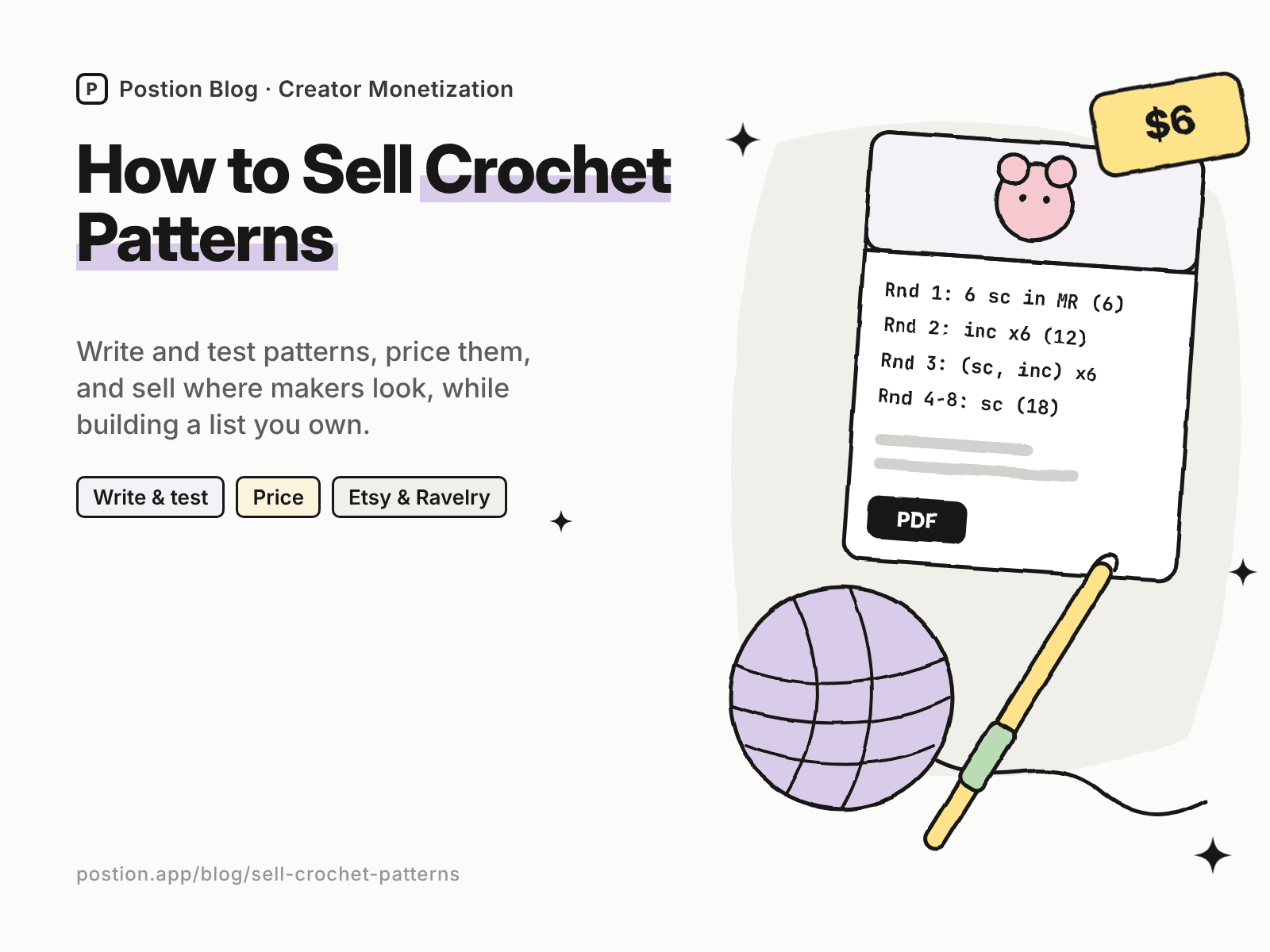
Selling finished crochet items takes hours per piece. Selling patterns doesn't. Once you've written, tested and photographed a pattern, you can sell it to hundreds of makers without crocheting another stitch. That's why so many makers want to learn how to sell crochet patterns online.
The challenge is quality and visibility. Buyers have thousands of free patterns to choose from, so a paid pattern has to be clear, tested and beautifully presented. This guide covers how to write patterns people pay for, how to price them, where to sell crochet patterns, and how to market them. Everything here applies to knitting patterns too.
New to digital products? Our guide on how to sell digital products for beginners covers the basics.
Step 1: Choose Designs That Sell
The best-selling crochet patterns are usually one of these:
- Amigurumi: animals, characters and seasonal toys, especially with a distinctive style.
- Wearables: sweaters, cardigans, tops and hats, especially modern, beginner-friendly designs.
- Home decor: blankets, pillows, baskets and wall hangings.
- Accessories: bags, scarves, shawls and hair accessories.
- Seasonal patterns: holiday ornaments, Halloween and Easter projects, released ahead of the season.
To validate an idea, search Etsy and Ravelry for similar designs and check how many reviews or projects they have. Watch which of your posts get the most "pattern please?" comments. Those are your first products.
Step 2: Write a Pattern People Can Follow
A clear pattern is the product. Include:
- Skill level and a short description of the finished item.
- Materials: yarn weight, fiber, yardage, hook size and notions.
- Gauge and finished measurements, with sizes for wearables.
- Abbreviations, and whether you use US or UK crochet terms. Many designers follow the Craft Yarn Council's standard abbreviations.
- Step-by-step instructions with stitch counts at the end of each round or row.
- Photos or charts for tricky steps.
- Your terms of use, such as whether buyers can sell items they make from the pattern, and that the pattern itself can't be shared or resold.
Test before you sell
- Use pattern testers. Ask a group of crocheters with different skill levels to make the pattern and report errors and unclear steps.
- Hire a tech editor for complex patterns and garments with several sizes. They check the math, stitch counts and consistency.
- Fix and re-release. Note the version and date in the pattern so buyers know they have the latest copy.
Format the PDF
Use a clean, printable layout with a cover photo, your logo, materials on the first page, and large, readable instructions. Offer a printer-friendly version without big photos if your pattern is long.
Step 3: Price Your Crochet Patterns
These ranges are typical for independent designers:
| Pattern type | Typical price |
|---|---|
| Small amigurumi, accessory or ornament | $4–$7 |
| Standard amigurumi, bag or home decor | $5–$9 |
| Blanket or large home project | $6–$12 |
| Garment with several sizes | $8–$15 |
| Pattern bundle or ebook (4–10 patterns) | $15–$35 |
Pricing tips:
- Price on complexity and value, not page count. A sweater pattern with eight graded sizes takes far more design and testing than a coaster.
- Bundle collections. A seasonal bundle at a discount lifts your average order and loses less to fixed per-order fees.
- Run launch discounts. A short launch price rewards your email list and followers for buying early.
Step 4: Where to Sell Crochet Patterns
Here's what you keep from a $6 pattern on common options, using US card payments:
| Where to sell | Main fees | You keep | Buyer emails? |
|---|---|---|---|
| Etsy | $0.20 listing + 6.5% transaction + 3% + $0.25 processing | About $4.98 | No |
| Gumroad | 10% + $0.50, plus 2.9% + $0.30 processing | About $4.43 | Yes |
| Payhip (Free plan) | 5%, plus 2.9% + $0.30 processing | About $5.23 | Yes |
| Postion (Free plan) | 5%, plus 2.9% + $0.30 processing | About $5.23 | Yes |
| Postion (Pro plan) | 0%, plus 2.9% + $0.30 processing | About $5.53, before the monthly plan price | Yes |
Fees change often. Check each platform's pricing page, or plug in your own numbers with the creator platform fee calculator.
Marketplaces for crochet patterns
- Etsy: the largest audience of buyers searching for patterns, with heavy competition.
- Ravelry: the biggest community of knitters and crocheters, where buyers find patterns through searches and other makers' projects. Its pattern store has charged no fee on a designer's first $30 of monthly sales and 3.5% above that, plus payment processing. Check Ravelry's current terms.
- Ribblr, LoveCrafts and Makerist: smaller marketplaces with their own pattern audiences.
Your own site
Selling from your own site or a checkout tool keeps more of each sale and lets you email buyers when you release new patterns. Many designers list on Etsy and Ravelry for discovery and send their followers to their own shop. Our list of Gumroad alternatives compares more checkout tools.
Selling patterns on Postion
Postion suits designers who blog or send a newsletter about their work. Publish a paid post with photos of the finished project as the free preview, set a one-time price, and put the PDF download link behind the paywall. Buyers pay once and unlock it, and every buyer's email lands in your fans list. You can also run a pattern club as a paid membership, with a new pattern each month, using ideas from our guide to Patreon tier ideas and how to price a membership community.
It isn't a full storefront. Postion doesn't have a product catalog, cart or bundles, and you'll host PDF files elsewhere and share the link. The platform fee is 5% on the Free plan, 2% on Launch and 0% on Pro, plus card processing at cost. See what Postion is.
Step 5: Market Your Patterns
- Photograph the finished piece beautifully. Natural light, clean backgrounds and photos of the item in use matter more than anything else.
- Post process videos. Reels, TikToks and YouTube Shorts of the making process build anticipation for a pattern release.
- Use Pinterest. Pin every pattern with keyword-rich titles such as "easy crochet bunny pattern."
- Build an email list. Offer a free mini pattern in exchange for an email, and send new releases to your list first.
- Share testers' and buyers' projects. Ravelry project pages and tagged posts are powerful social proof.
- Release seasonally. Publish holiday and seasonal patterns six to eight weeks early so makers have time to finish them.
For more ideas on earning from a small following, see how to monetize a small audience. If you also design printable trackers or planners, our guide on how to sell printables online covers those.
FAQ: How to Sell Crochet Patterns
Q: Can you make money selling crochet patterns? A: Yes. Many designers earn a steady side income, and some build full-time businesses with large pattern catalogs. Results depend on clear, tested patterns, great photos, and steady marketing on Pinterest, social media and an email list.
Q: Where is the best place to sell crochet patterns? A: Etsy and Ravelry bring the most buyers looking for patterns. Your own site or a checkout tool like Payhip keeps more of each sale and gives you buyer emails. Most designers use a marketplace for discovery and their own shop for launches and bundles.
Q: How much should I charge for a crochet pattern? A: Most patterns sell for $4–$8. Garments with several sizes and large projects often sell for $8–$15, and bundles for $15–$35. Price on complexity and the value of the finished item.
Q: Do I need to test my crochet patterns before selling? A: Yes. Testers catch errors and unclear steps that you'll miss in your own pattern. For garments and complex designs, a tech editor is worth the cost.
Q: Can buyers sell items made from my pattern? A: That's up to your terms, but enforcement varies. Many designers allow small-scale sales of finished items with credit to the designer. State your terms clearly in the pattern and listing.
Start Selling Your First Pattern
Learning how to sell crochet patterns comes down to a simple loop: design something makers want, write and test it carefully, photograph it beautifully, price it fairly, and sell it where makers already look while building a list you own. Start with the design your followers keep asking about.
Ready to sell your first pattern? See how Postion works to sell paid posts and pattern-club memberships on your own site, keep every buyer's email, and pay a platform fee from 5% down to 0%.
Topic Hub
Explore the Creator Monetization Hub
A topic cluster built around monetization systems, pricing logic, digital products, memberships, and sustainable creator revenue.
Keep Exploring
Related Reads
More posts connected to this topic cluster and reading path.
How to Sell Canva Templates in 2026: Rules & Pricing
Learn how to sell Canva templates: what Canva's license allows, templates that sell, how to deliver template links, what to charge, and where to sell them.
How to Sell Lightroom Presets: A Step-by-Step Guide (2026)
Learn how to sell Lightroom presets: create presets that sell, export XMP and DNG files, price your packs, and compare where to sell presets online.
How to Sell Recipes Online: 7 Ways to Make Money (2026)
Learn how to sell recipes online with cookbooks, meal plan memberships and paid recipe posts, where to sell them, and what to charge to make money from recipes.